
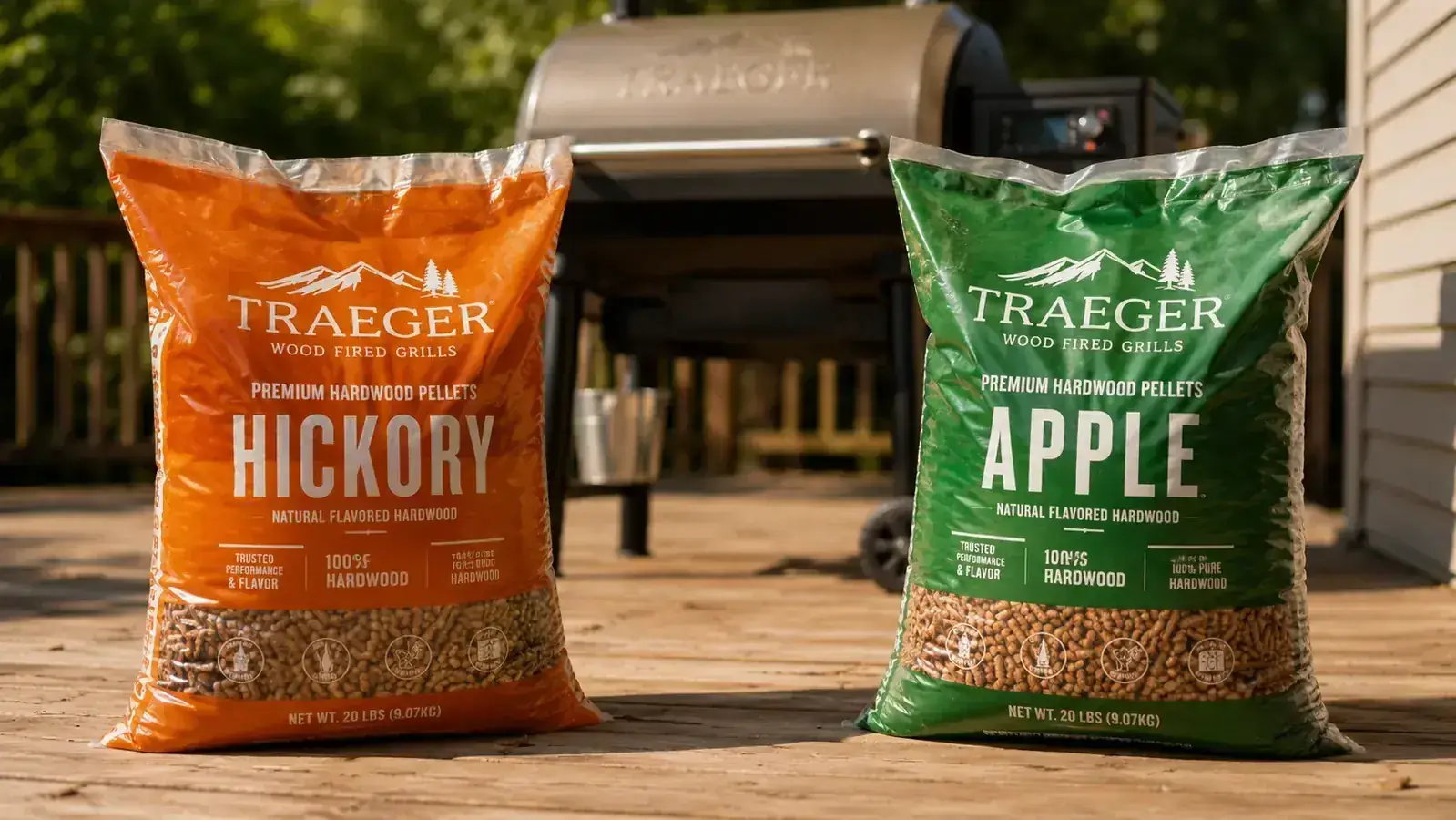
If you are trying to decide between Traeger Signature Blend and Bear Mountain BBQ pellets, here is the short answer: Traeger wins on consistency and smoke character, and Bear Mountain is a reasonable runner-up at a lower per-pound cost when you catch it on sale. But the gap is bigger than the price difference suggests, especially when you are running long cooks where pellet quality compounds across 10 or 12 hours of smoking. We ran both brands back to back on the same pellet smoker, with the same 8-pound pork butt, the same 225-degree target temperature, and the same ambient conditions across two weekends. The results were clear enough that we stopped second-guessing ourselves by the third cook.
Worth noting up front: Traeger Signature Blend currently sits at 4.8 stars with over 50,000 Amazon reviews, making it the most reviewed pellet product on the platform by a wide margin. That review volume is not just social proof. It is a signal that a lot of different pitmasters using a lot of different smokers have found this pellet reliably good enough to come back to and say so publicly. Bear Mountain is also a well-regarded brand with strong reviews, but at roughly one-quarter the review volume, it has not been tested across as wide a range of grill brands and cooking conditions. That matters when you are trying to make a decision for your specific setup.
| Traeger Signature Blend | Bear Mountain BBQ Pellets | |
|---|---|---|
| Wood Blend | Hickory, Cherry, Maple (3-wood blend) | Alder base with oak and fruit wood blend |
| Bag Size | 20 lb bag | 20 lb bag |
| Price Per Pound (typical) | Check today's price on Amazon | Lower when on sale |
| Amazon Rating | 4.8 stars (50,956 reviews) | 4.7 stars (~14,000 reviews) |
| Moisture Content (claimed) | Below 5% | Below 6.5% |
| Ash Output (observed per 6-hr cook) | Low, fine white ash | Moderate, slightly coarser ash |
| Fines in Bag Bottom | Minimal, very few broken pieces | Noticeable layer of fines in lower third |
| Smoke Flavor Profile | Balanced sweet-savory, mild hickory backbone | Lighter smoke, mild fruit-forward |
| Pellet Burn Rate (225 F, 65 F ambient) | ~1.7 lbs/hr | ~1.95 lbs/hr |
Where Traeger Signature Blend Wins
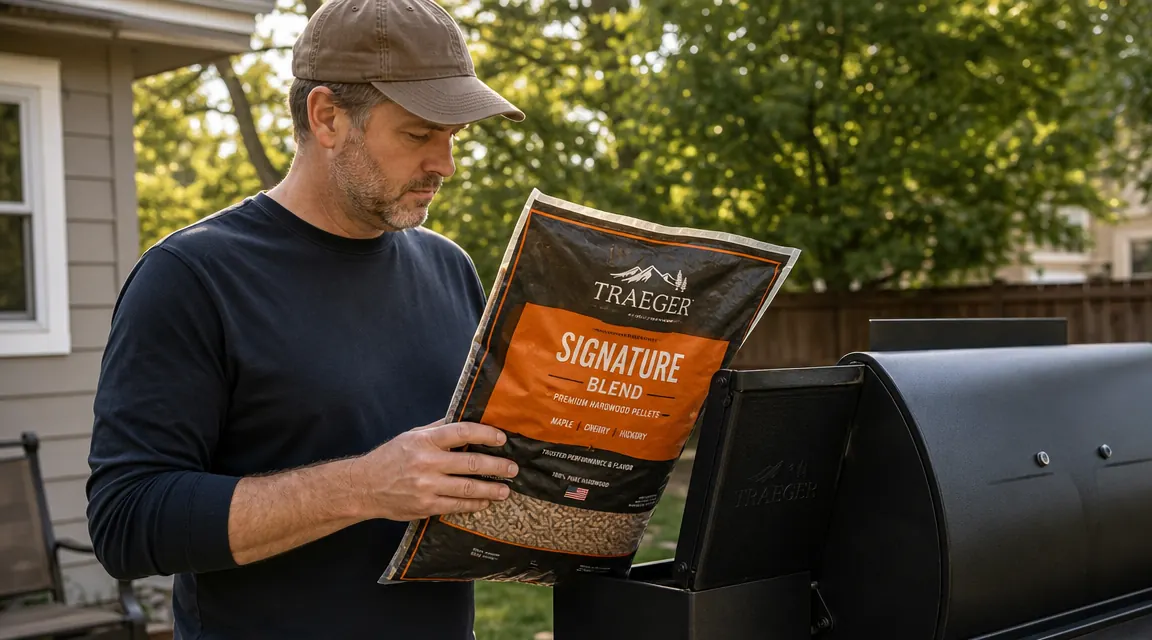
The three-wood combination is what sets Traeger Signature Blend apart from most blends on the market. You get hickory for the savory backbone, cherry for color development and mild sweetness, and maple for a clean background note that keeps the smoke from going bitter or acrid during long cooks. That triangle of flavors is balanced in a way that most single-wood or two-wood pellets cannot replicate. It works on almost every protein we have run through the smoker: beef brisket, pork shoulder, spare ribs, whole chicken, turkey breast, salmon, and even cauliflower steaks for guests who do not eat meat. Most pellet pitmasters who use single-wood pellets like straight hickory or mesquite eventually end up blending bags anyway to soften the edges. Traeger built that blend for you at the factory level, using kiln-dried hardwood with very low moisture content.
Ash output is the second major advantage. After a 10-hour pork butt cook, our ash pan on the Traeger run had noticeably less residue than the Bear Mountain run. Less ash means fewer interruptions to clean the firepot, more consistent airflow through the burn pot, and less risk of a partial blockage causing a temperature spike that ruins your cook at hour nine. On shorter cooks of three or four hours, this difference is minimal and most people would never notice it. But on a 14-hour overnight brisket, consistent combustion is not optional. Traeger also held its temperature target tighter during ambient temperature swings across our test weekend, which we credit partly to the lower moisture content in the pellets producing more stable combustion chemistry. For a deeper look at how these pellets perform across specific cooks, see our full long-term Traeger Signature Blend review.
Where Bear Mountain Wins
Price is Bear Mountain's clearest advantage, and it is a real one. When Bear Mountain goes on sale at major retailers or through Amazon subscribe-and-save, you can find it for around 70 cents per pound versus Traeger's consistent dollar-per-pound territory. On a heavy smoking season where you are going through 10 to 12 bags from May through October, that price difference adds up to roughly 30 dollars or more depending on how aggressively you shop. If budget is the primary constraint and you are mostly smoking chicken thighs, ribs, or vegetables where the smoke complexity difference between brands is less pronounced, Bear Mountain is a genuinely good pellet that will not ruin your cooks. Plenty of respectable pitmasters use it as their everyday pellet and reserve premium pellets for briskets and pork competitions.
Bear Mountain also earns credit for its lighter smoke profile, which some cooks actually prefer. New pellet grillers, especially those coming from propane or gas setups, sometimes find Traeger's hickory blend slightly assertive on delicate proteins like salmon, trout, and turkey breast. Bear Mountain's alder-forward blend produces a gentler smoke that is genuinely harder to overdo, even if you accidentally run the grill a little hot. If you are cooking for family members or guests who are sensitive to heavy smoke flavor, Bear Mountain's softer character gives you more margin for error on those proteins. That is a real-world advantage worth naming, not a consolation prize.
Your next brisket deserves a pellet that won't quit at 2 a.m.
Traeger Signature Blend is the most-reviewed wood pellet on Amazon for a reason. Consistent burn, low ash output, and a three-wood smoke profile that works on every protein from chicken thighs to overnight brisket. Check today's price before your next cook.
Amazon Check Today's Price on Amazon →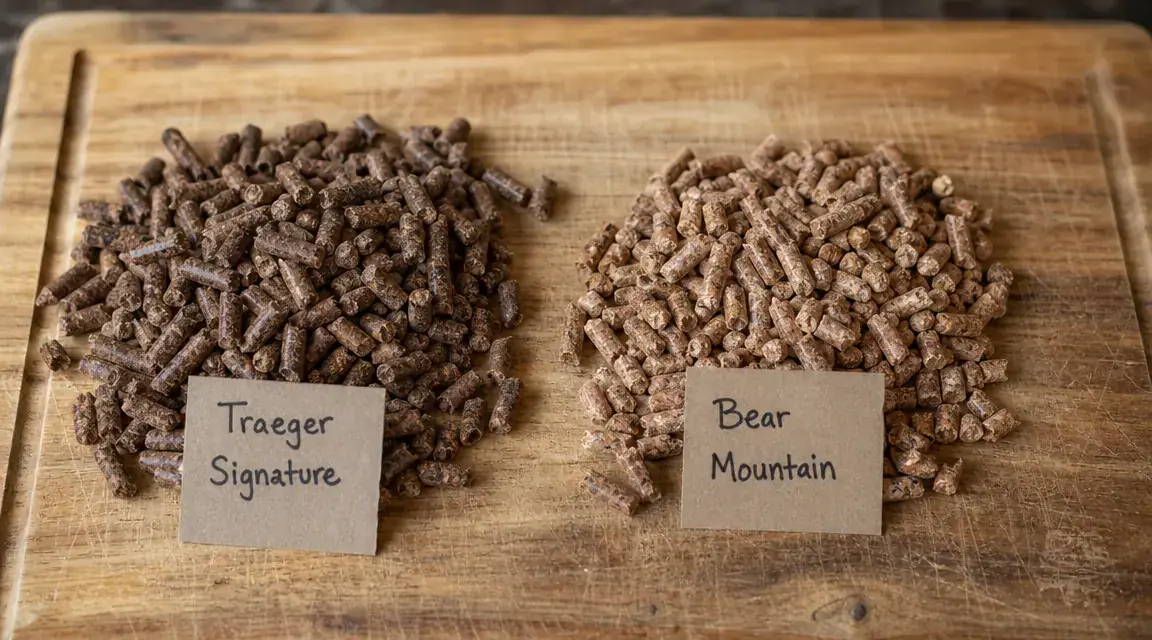
Smoke Flavor: What We Actually Tasted
We set up a blind taste test of pulled pork from both runs with four people who grill at least twice a month. We served identical portions on plain white plates with no sauce and no visible markings. Three of the four correctly identified the Traeger sample as the one with more smoke depth. The Bear Mountain sample was consistently described as lighter, cleaner, and easier to eat in large portions. The Traeger sample got descriptors like layered, complex, and the one that tastes like a real BBQ joint. No one said either sample was bad. But the preference split was clear and aligned with what the wood chemistry would predict.
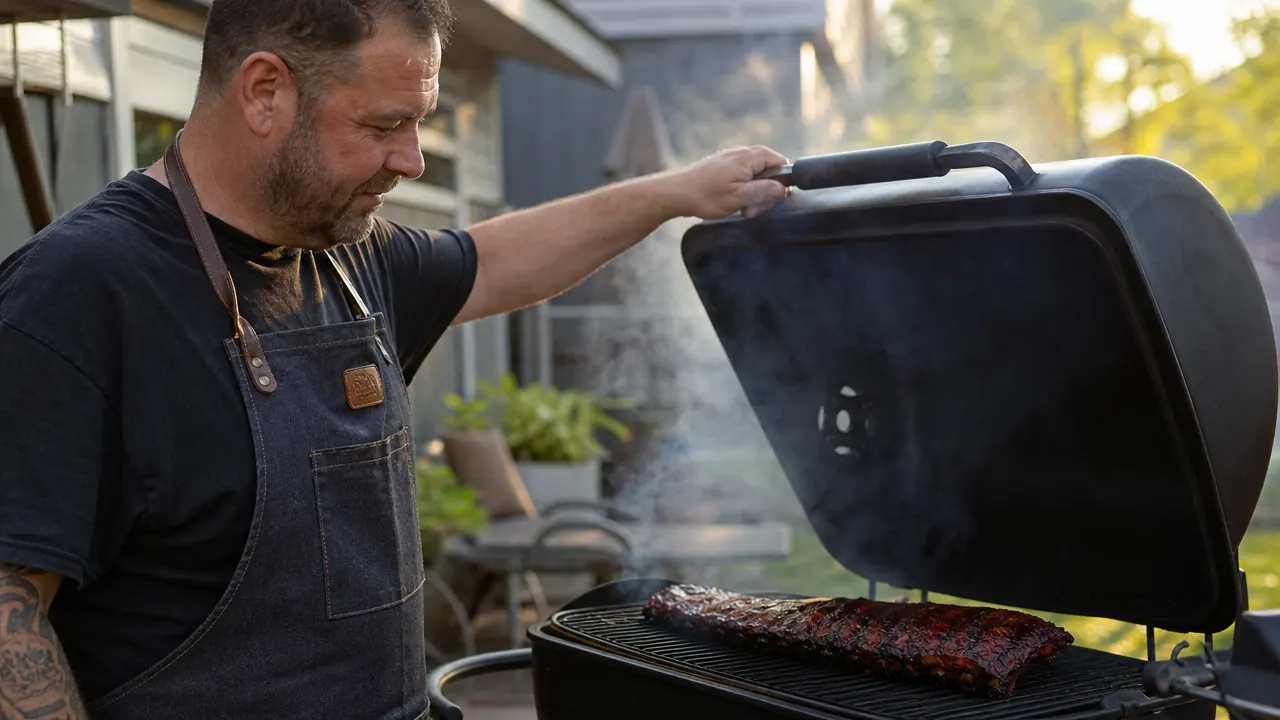
On brisket, the smoke ring from the Traeger run was about 30 percent deeper by visual measurement at the slice. Both rings were present, both batches were fully cooked to 203 degrees internal temperature, and both rested for 90 minutes wrapped in butcher paper. The difference showed up in flavor layering: the Traeger run had more of what pitmasters call smoke character, that combination of sweet and savory that develops when cherry wood compounds interacts with rendered fat and the myoglobin in the meat. Bear Mountain produced a solid brisket. Traeger produced the kind of brisket that makes people ask what you did differently.
Three out of four blind tasters picked the Traeger sample as the one with deeper smoke. The Bear Mountain pull was good. The Traeger pull got people asking what we did differently.
Pellet Quality and Burn Efficiency
Pellet quality shows up in two practical ways: how many fines (sawdust and broken pieces) you find in the bag, and how consistently the pellets hold their shape through the feed cycle from hopper to auger to burn pot. Fines are the enemy of consistent pellet grilling. They clog augers, cause inconsistent feed rates, and produce white acrid smoke instead of the clean thin blue smoke you are chasing. We inspected the bottom quarter of both bags after shipping and transport. Traeger had minimal fines, just a small amount of normal dust from bag movement. Bear Mountain had a noticeable layer of fines at the bag bottom, probably two to three handfuls on a 20-pound bag. This is a known characteristic of Bear Mountain that their regular users have learned to manage. If you buy a Bear Mountain bag, pour it slowly into your hopper and avoid dumping the very bottom of the bag directly into the feed system.
On burn efficiency, we measured pellet consumption across matched 6-hour cooks at 225 degrees in 65-degree ambient air with light wind. Traeger consumed 1.7 pounds per hour. Bear Mountain consumed 1.95 pounds per hour. That is a 15 percent higher consumption rate for Bear Mountain, which we attribute to the higher moisture content requiring more energy to fully combust. When you factor that into the effective cost per cook, Bear Mountain's price advantage narrows from about 28 cents per pound to closer to 10 to 12 cents per pound on an energy-equivalent basis. That is still a savings, but it is a smaller gap than the sticker price suggests.
Who Should Buy Which
Buy Traeger Signature Blend if you are doing long overnight cooks, if you want one pellet that handles every protein on your rotation without needing to swap or blend, or if you have had auger issues or temperature swings with other brands and want the most consistent pellet quality available at this price point. The 50,000-plus Amazon reviews represent tens of thousands of pitmasters who found it good enough to come back and say so. For more on tailoring your pellet choice to specific proteins, check our guide on how to match wood pellets to specific meats.
Buy Bear Mountain if you are on a tighter budget, running shorter cooks of six hours or less, or specifically looking for a lighter smoke touch on delicate proteins where Traeger's hickory blend might be too assertive. It is a good everyday pellet for routine weekend grilling. It is not the right call for a competition brisket or a once-a-year holiday cook where the smoke quality needs to be dialed in from the first hour to the last. Know what you are cooking and pick accordingly. For most pitmasters who do a mix of everything across a full season, Traeger Signature Blend is the easier default.
One bag that handles everything from pork shoulder to salmon without switching blends.
A 20-pound bag of Traeger Signature Blend covers 10 to 12 hours of smoking depending on your grill and target temp. If you are planning a weekend cookout or want to stock up before a holiday smoke session, check today's price and see if a multi-bag order makes sense.
Amazon Check Today's Price on Amazon →