
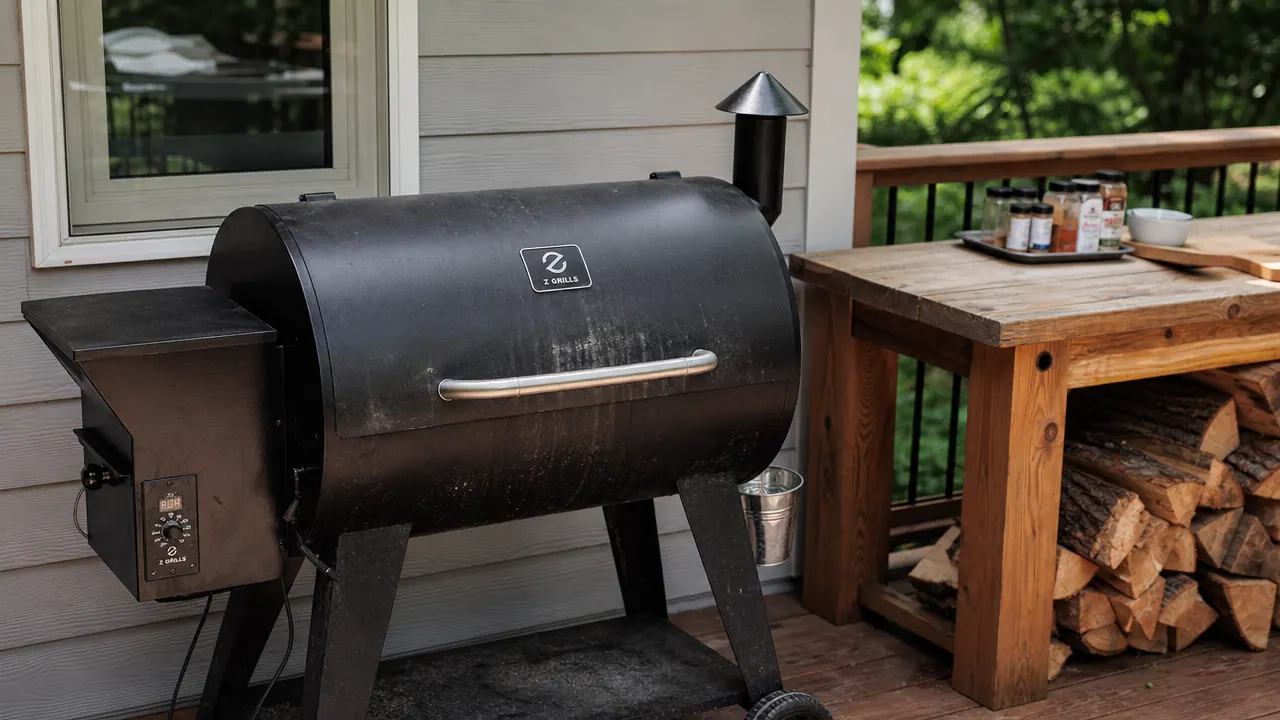
We burned through two budget charcoal setups and a propane grill with a warped grate before we started taking weekend grilling seriously. When we finally pulled the trigger on the Z Grills ZPG-450A2, the goal was simple: stop babysitting the fire and start producing consistent food. That was 18 months ago. Since then we have run about 60 cooks on this thing, from 3-hour chicken sessions to 14-hour overnight briskets in conditions ranging from 85-degree summer afternoons to a 28-degree Super Bowl Sunday smoke. This review is the full accounting, the good and the parts that need a workaround.
The short answer is that the ZPG-450A2 earns its keep for weekend pitmasters who want wood-smoke flavor without constant attention. The PID V3.0 controller is genuinely better than the older dial systems, and 459 square inches of cooking space handles a full packer brisket with room for a rack of ribs alongside it. That said, there are a few things you should know before you buy, and we would rather tell you now than have you find them mid-cook.
The Quick Verdict
A capable, consistent pellet smoker that punches above its price for weekend cooks. The PID controller is the real selling point. The hopper capacity and flimsy drip pan liner are the two things to plan around.
Amazon Check Today's Price →Still deciding? Check today's price on Amazon before the next cookout.
The ZPG-450A2 regularly sells at a discount off the list price. It is worth checking current pricing before your next big smoke session.
Amazon Check Today's Price on Amazon →How We Have Used It
Our test setup is a standard suburban backyard in the midwest. We are not competition cooks, but we take weekend sessions seriously. Most cooks are for a household of four plus guests, which means we are regularly cooking a full brisket flat, two racks of baby backs, or a 7-pound pork shoulder. The grill lives on a covered concrete pad, and we keep it under a grill cover between uses.
We use a mix of hickory, cherry, and a generic competition blend depending on what we are cooking. Most cooks run at 225F or 250F for low-and-slow, with occasional high-heat sessions at 450F for chicken thighs and reverse-sear steaks. We have run the grill in temperatures from 28F to 96F, in calm and in gusting wind, through light rain under the patio overhang, and through direct afternoon sun in July.
We track every cook in a notes doc with date, outside temp, pellet type, set temp, actual range via a secondary probe, total cook time, and notes on smoke output. After 60 entries, patterns show up. That data informs everything in this review. For reference, we have also compared the ZPG-450A2 against a friend's offset stick burner and a neighbor's Traeger Pro 22 during side-by-side cookouts.
PID V3.0 Controller: What It Actually Means for Your Cooks
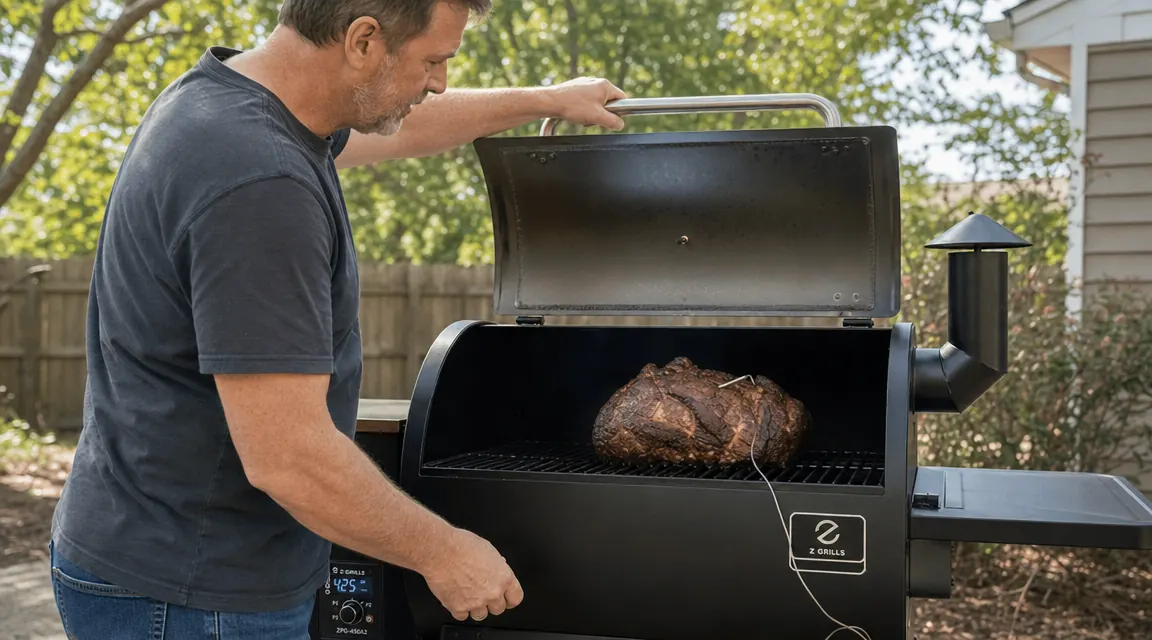
The biggest upgrade over older Z Grills models is the PID V3.0 controller. PID stands for proportional-integral-derivative, which is a feedback loop the controller uses to modulate pellet feed rate and maintain a target temperature. In plain terms, it holds temperature more steadily than a simple cycle-timer controller does, and that matters on cooks lasting more than 4 or 5 hours.
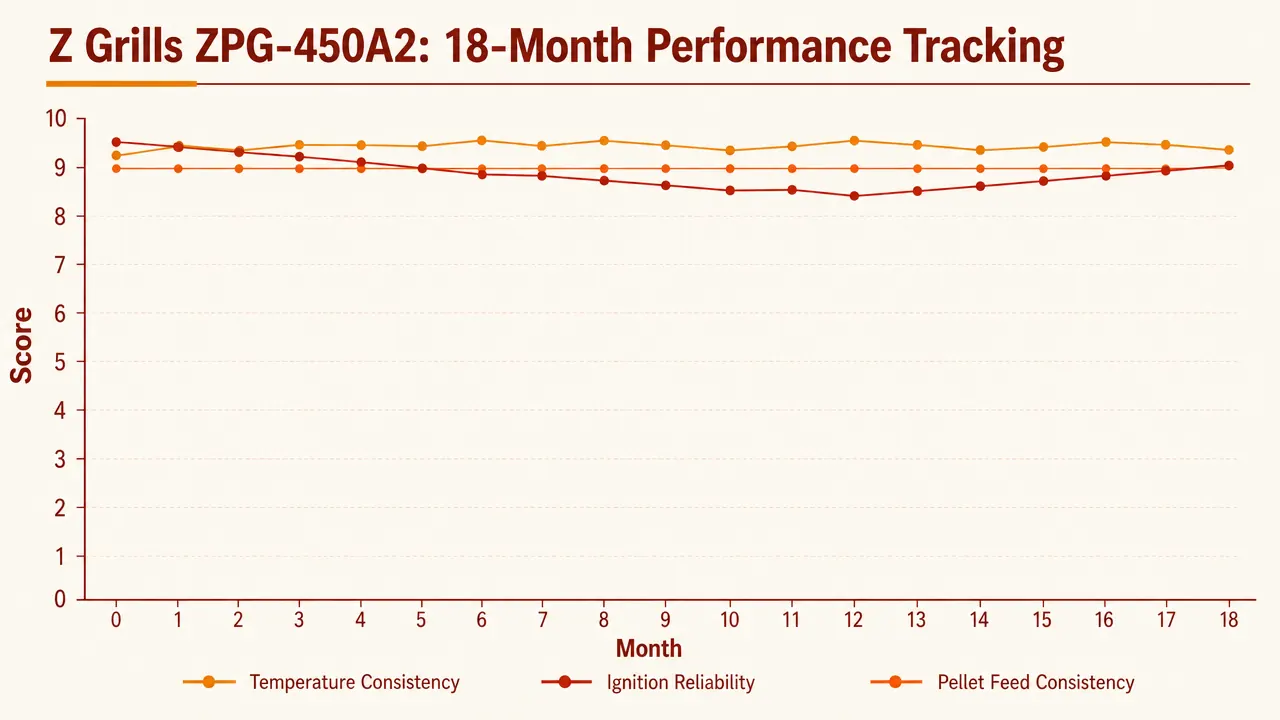
In practice, we see the grill hold within plus or minus 10 degrees of the set point during steady-state cooks on warm days. That is genuinely solid performance for this price tier. During cold-weather cooks the swing widens to about plus or minus 20 degrees, which is still workable for low-and-slow but noticeable. Opening the lid to spritz or probe resets the recovery cycle, and the controller brings temp back up within 5 to 6 minutes in most cases. We learned early to reduce lid-open time by using a wireless probe rather than constantly checking with a handheld.
Where the controller earned its keep most was during the overnight brisket cook. We set it to 225F at 11 PM and pulled the brisket at 1 PM the next day. We went inside and checked the probe app twice in that window. The cook logs show the grill stayed in range the entire 14-hour session without any manual intervention. That kind of reliability is not something you get from a basic charcoal or offset setup without a dedicated fire-tender sleeping in a lawn chair.
Fourteen hours, two app checks, and the brisket hit 203F internal right on schedule. That night alone justified every dollar of the purchase.
Cooking Space and Grate Layout
The 459 square inches of cooking space is split across a main grate and a smaller upper rack. The main grate handles a full packer brisket, which on our heaviest cook came in at 16 pounds untrimmed and fit with a few inches to spare on each side. We have also run two 7-pound butts side by side with no crowding. The upper rack is useful for holding items that need indirect heat or for warming buns and sides near the end of a long cook.
The grates are porcelain-coated cast iron, which holds heat well and is easy to maintain. After 18 months we have not seen significant flaking on the porcelain surface. A light brush after each cook and a wipe with a dry cloth between sessions keeps them in good shape. We do not soak them in a sink, which is how porcelain grates typically start to degrade, and we would recommend the same to anyone picking this grill up.
One layout note worth flagging: the drip tray sits close to the firepot, and the stock foil liner that comes with the grill is thin enough that grease can burn through it and collect under the tray. After the third cook we swapped it for a thicker aftermarket foil pan that we cut to fit. That simple change saved us two messy cleanups. It is not a dealbreaker, but it is a detail worth knowing before your first cook rather than discovering it while cleaning up after a brisket.
Hopper Capacity and Pellet Consumption
The hopper holds roughly 15 pounds of pellets. At 225F, we burn through about 1 to 1.5 pounds of pellets per hour depending on ambient temperature and wind. On cold days that number climbs closer to 1.5 pounds. A 15-pound hopper gives you 10 to 12 hours at low-and-slow temps before you need to refill. For most weekend cooks that is sufficient. Ribs, chicken, pork butt, and shorter smokes all fit easily within one load.
For a full packer brisket or an overnight cook on a large shoulder, you will want to top off the hopper before you go to bed or set a reminder to check around the 8-hour mark. We learned this on cook number 4 and have not had a pellet-out event since. The hopper lid seals well enough against moisture that we have not had a clump or an auger jam in 18 months, which speaks well to the design given how humid our summers get.
Smoke Output and Flavor Results
This is where pellet grill debates get loud, so we will be direct: the ZPG-450A2 produces lighter smoke than a stick burner or a dedicated offset. If you are chasing competition-level smoke rings and a heavy bark on every cook, a pellet grill is a compromise. That said, the smoke output from this unit is better than some pellet grills in the same category, and it is more than enough to produce a visible smoke ring on brisket and pork ribs.
We get the best smoke flavor by running the grill at 180 to 200F for the first two hours of a long cook before bumping to 225F or 250F. That low-and-slow opening phase maximizes smoke contact with the protein before the bark sets and starts blocking absorption. Cherry wood pellets produce a noticeably sweeter, fruitier profile on pork ribs compared to hickory, which runs darker and more savory on beef. The grill responds consistently to different pellet varieties without any auger adjustments needed.
For more on how pellet flavor fits into the charcoal-versus-pellet debate, see our breakdown of why pellet grills beat charcoal for weekend pitmasters. The flavor argument is real and it goes beyond convenience.
What I Liked
- PID V3.0 controller holds temp within plus or minus 10 degrees on most warm-weather cooks
- 459 square inches comfortably fits a full packer brisket plus sides
- Porcelain-coated cast iron grates have held up well after 60 cooks
- Quiet auger system with zero jams in 18 months of regular use
- Solid smoke output for a pellet grill, especially with a low-temp smoke window at the start of long cooks
- Easy to assemble, around 45 minutes solo with basic tools
Where It Falls Short
- 15-pound hopper is not enough for unattended overnight cooks without a mid-cook top-off
- Stock foil drip liner is too thin, replace it before your first cook
- Temperature swings widen to plus or minus 20 degrees in cold or windy conditions
- Smoke output is lighter than an offset stick burner, not a competition rig
- No WiFi connectivity, Bluetooth-only app with limited range outside the backyard
Build Quality After 18 Months
The steel body has held up well under regular use and midwest weather cycles. We keep a grill cover on it between cooks and move it under the patio overhang during hard rain. The legs are solid, with no wobble or flex after a season and a half of loading and moving. The rear wheel assembly makes repositioning easy enough that one person can handle it without help.
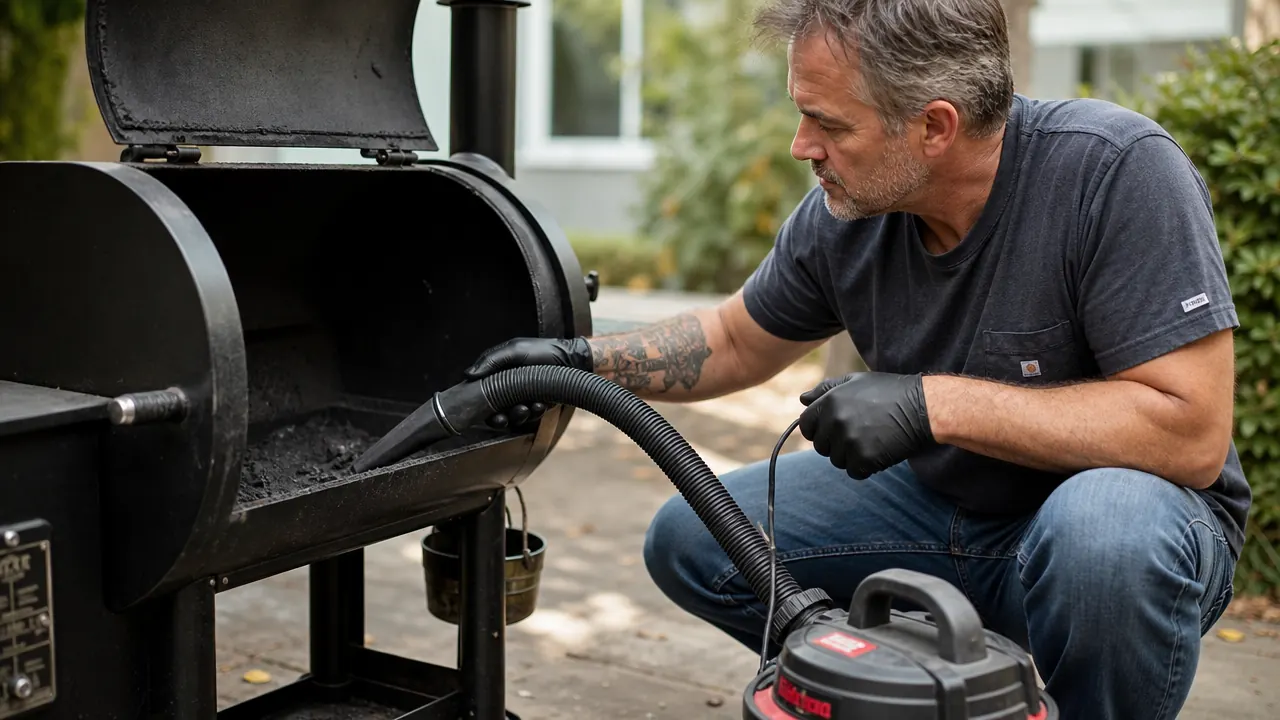
The lid hinge shows no signs of loosening, which we mention because a loose lid is a real temperature-control problem over time and a common failure point on budget grills. The grease drain tube has stayed clear, though we flush it with warm water and a bottle brush every 10 cooks as routine maintenance. The digital display has held its readability and button response through two full seasons of outdoor use.
Overall, for a grill in this price category, the build quality is a genuine positive. It does not feel like a unit that will need to be replaced in two years. Whether it lasts 5 to 7 years with regular use is a question we cannot yet answer, but nothing in the current condition suggests a short lifespan.
Who This Is For
The ZPG-450A2 is the right grill for the weekend pitmaster who wants consistent results without constant fire management. If you cook for a family on weekends, host occasional cookouts for a dozen people, or want to run a long smoke without dedicating your whole day to tending the fire, this grill handles all of that well. It is also a smart first pellet grill for someone moving up from charcoal who wants real wood-smoke flavor with fewer variables to manage. For a side-by-side look at how it stacks up against a brand-name alternative, see our Z Grills vs Traeger Pro 22 head-to-head comparison.
Who Should Skip It
Skip the ZPG-450A2 if you need heavy competition-style smoke output and a thick bark above everything else. A stick burner or dedicated offset will serve you better for that goal, even though the learning curve is steeper and the babysitting never ends. Also skip it if you need WiFi remote monitoring for truly unattended overnight cooks where walking outside is not an option. The Bluetooth range is adequate for a standard backyard but not reliable through walls and floors. WiFi-capable pellet grills exist at higher price points and that connectivity is worth paying for if you need it.
Ready to stop babysitting charcoal and start getting consistent smoke every weekend?
The ZPG-450A2 is one of the better pellet grills in the budget-to-mid range. Check what it is going for on Amazon right now before your next big cook.
Amazon Check Today's Price on Amazon →