
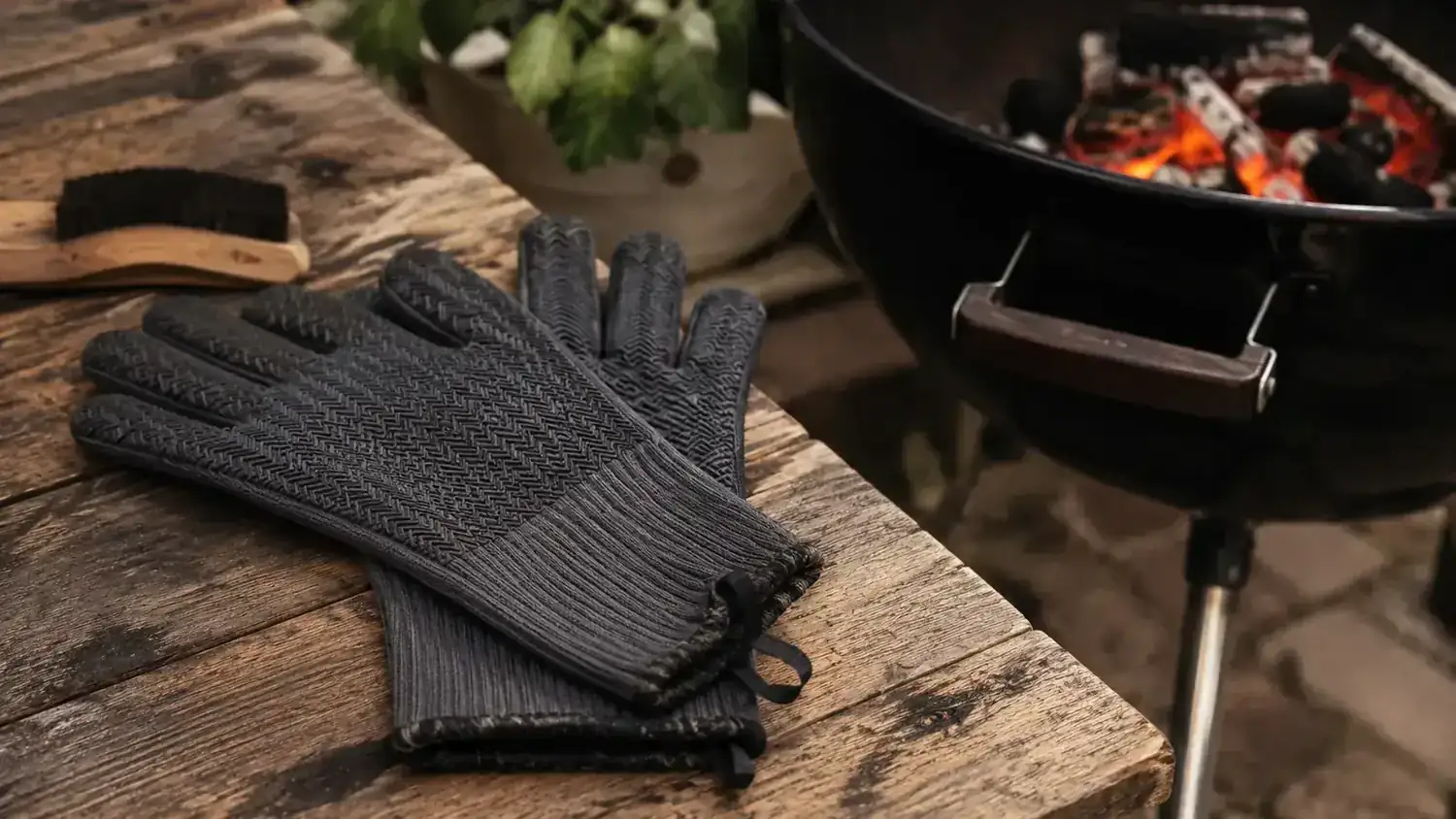
Let me tell you what made me actually sit down and test these properly. My neighbor Marcus, who runs a smoker every other Saturday, held up his RAPICCA gloves last spring and said they were the best thing he had ever bought for the grill. Two weeks later a guy in my BBQ group posted that he felt heat burning through after about 10 seconds on a hot grate. Same gloves. Same model. Two totally different experiences. That kind of gap does not come from one person being wrong. It comes from a product that has real limitations most reviewers never explain.
The RAPICCA 932F BBQ Gloves carry a 4.6 out of 5 rating across more than 20,000 reviews on Amazon, which is a genuinely strong number. I am not here to say the rating is wrong. But I spent several sessions putting these gloves into situations that expose the fine print, and what I found should change how you think about buying them, using them, and washing them.
The Quick Verdict
Solid heat protection for most grilling tasks, but the 932F number is marketing, not a real-world ceiling, and dexterity goes out the window once you need precision work.
Amazon Check Today's Price →If you have burned your hands moving a hot grate, these gloves fix that problem today.
The RAPICCA 932F gloves are in stock on Amazon and ship fast. Check the current price before buying, since it moves around a bit.
Amazon Check Today's Price on Amazon →How I Tested These Gloves
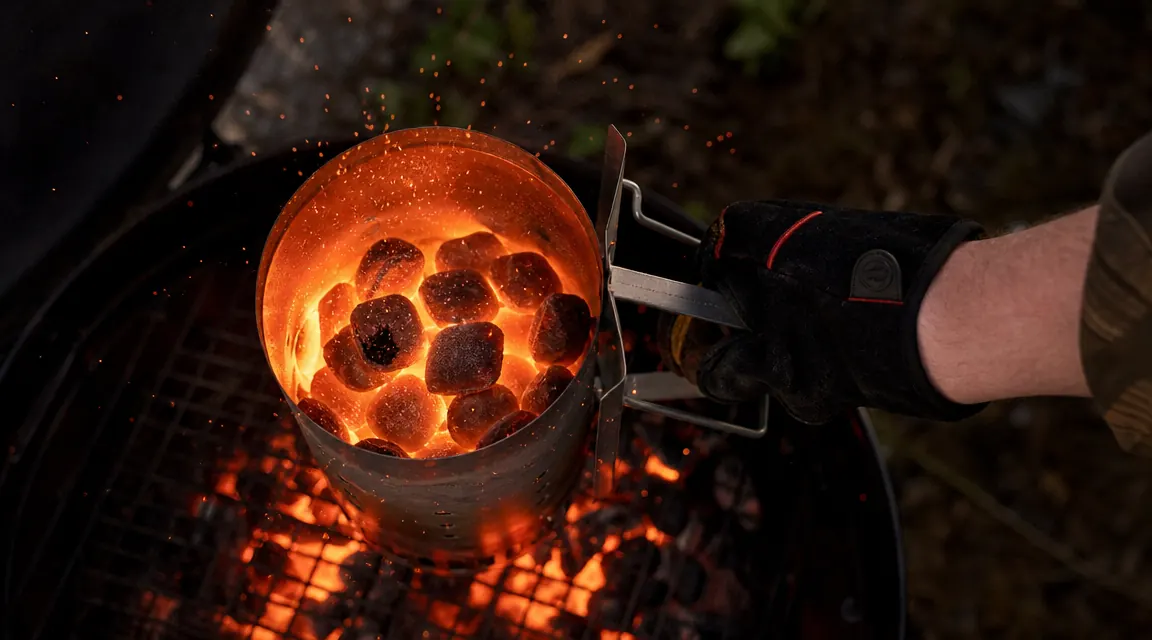
I set up three distinct tests to get past the usual review-unit experience of picking up a warm pan and calling it a day. First was the chimney starter grab: a fully loaded Weber chimney after about 12 minutes of lighting, grabbed at the side handle and held for 30 seconds without setting it down. Second was the direct grate test: a cast iron grate on my charcoal kettle, measured at roughly 580 to 620 degrees Fahrenheit with an infrared thermometer, where I gripped the grate and moved it from the two-zone setup to full-coverage position. Third was the long-form pull: after a 12-hour overnight pork shoulder smoke on my pellet grill, I used the gloves bare-handed to pull the shoulder from the grate and shred it by hand.
I also ran them through my dishwasher twice and hand-washed them once, then repeated the grate test to see if heat protection changed. That last part is where things got interesting, and not in a good way.
One thing to note: I bought a size large, and my hands are about medium-large. Fit matters for these gloves more than most glove reviews let on, so I will get into sizing specifics in a later section.
The 932F Claim: What It Actually Means
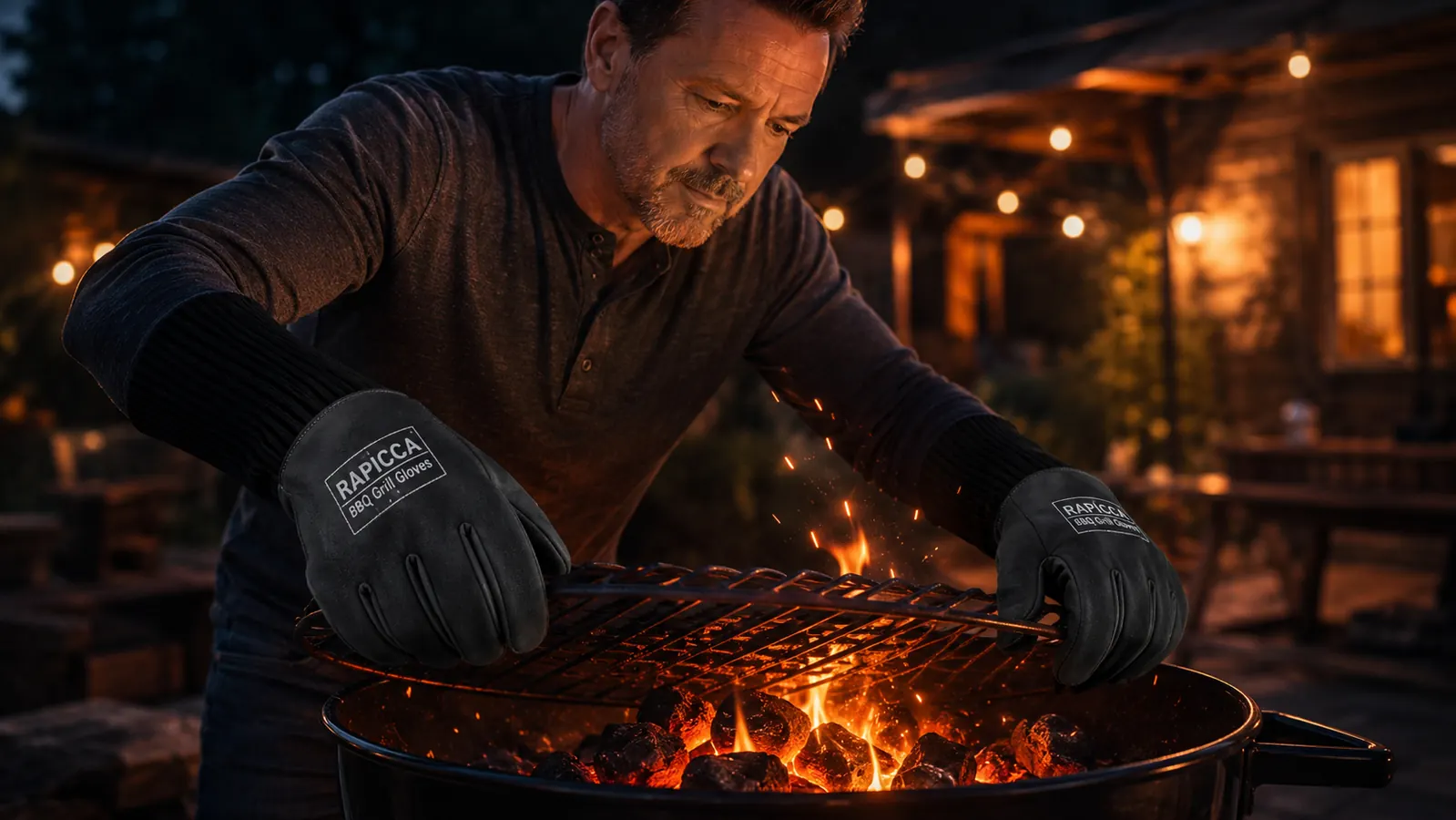
The number on the box is 932 degrees Fahrenheit, which is 500 degrees Celsius. That figure refers to the outer silicone coating's material tolerance, not to how long your hand stays comfortable inside the glove at that temperature. This distinction matters enormously and it almost never appears in the listing or the reviews.
In plain terms: the silicone shell will not melt or catch fire at 932 degrees. Your hand, however, will feel significant heat transfer within 5 to 8 seconds of direct contact at that temperature. During my 580-degree grate test, I had comfortable contact for about 6 to 7 seconds before I felt heat building. That is actually useful. If you are adjusting a grate, moving a chimney, or rotating a chicken, 6 seconds is enough. If you are fumbling with a stuck lid bolt on a 600-degree grill, it is not.
Compare that to the marketing language on the Amazon page, which says things like "handles high heat up to 932F" and "withstand temperatures over 900 degrees." Those phrases are technically accurate about the silicone material and completely misleading about how long your hand is protected at those temperatures. I am not saying the company is lying. I am saying the gap between what the number implies and what it delivers in the field is wide enough to cause burns if you read the listing literally.
The silicone will not melt at 932 degrees. Your hand will feel heat in about 6 seconds. Know which promise actually matters to you before you buy.
The Grip: Better Than It Looks, Worse Than It Should Be
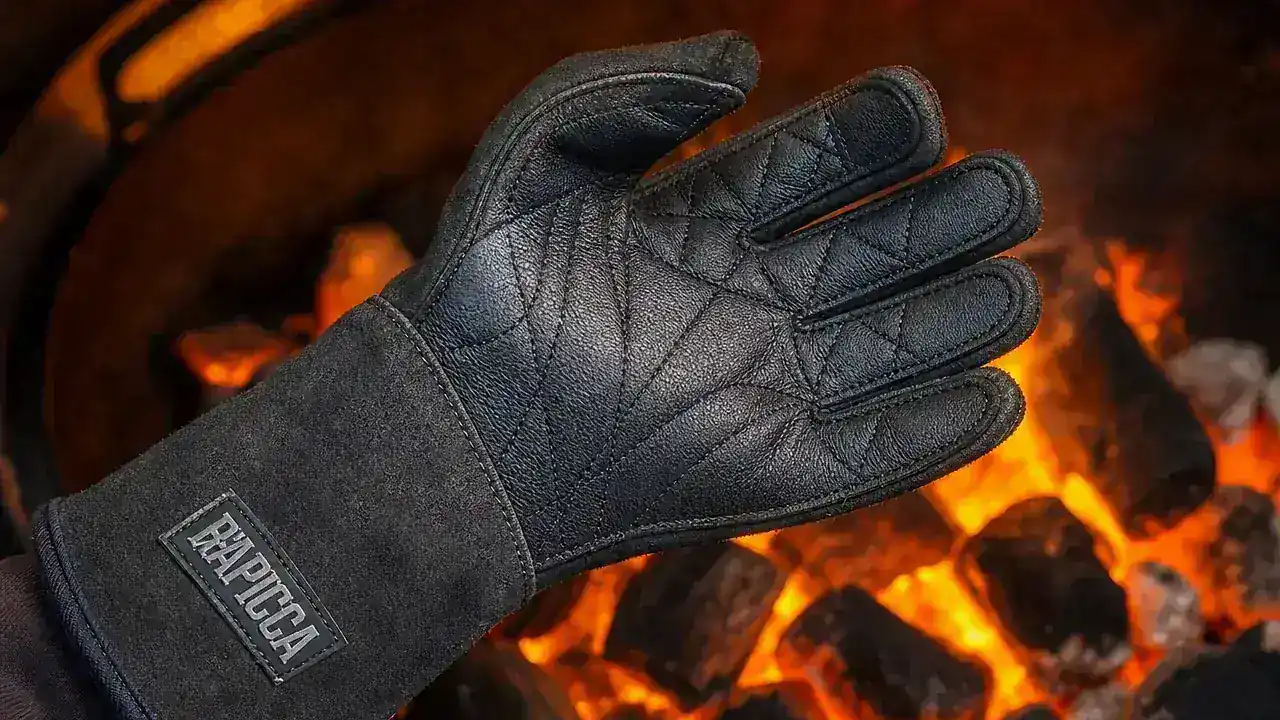
The outer silicone texture on the RAPICCA gloves is good. It is not great, but it is genuinely better than fabric-only grill gloves at handling anything wet or greasy. During my pork shoulder pull, juice was running down the outside of the gloves and I did not drop anything. The silicone channels and the raised dot pattern give the gloves a real grip advantage over oven mitts or the popular cotton BBQ gloves.
The problem is dexterity. These are thick gloves. The outer silicone layer, the inner insulation, and the cotton lining add up to a glove that is maybe 5mm thick across the palm. Picking up a beer while wearing them is a two-handed project. Operating a thermometer probe, adjusting a vents dial with any precision, or untying the butcher's twine on a roast is genuinely frustrating. I knocked a temperature probe off my smoker shelf twice trying to check placement mid-cook because I could not feel my fingertips well enough to catch it.
If your primary use is moving large objects, large racks, and heavy cuts of meat, the dexterity loss is not a problem. If you are the kind of griller who fiddles with knobs, probes, and small clamps throughout a cook, you will be pulling one glove off constantly. That brings its own risks.
The Waterproofing Test: Mostly True, With a Catch
The listing describes these as waterproof and oil-resistant, and that claim holds up reasonably well in normal grilling conditions. Splatter from a brisket, juice from a pork shoulder, sauce drips off a rack of ribs, none of those penetrated the outer layer during my tests. The silicone does what silicone does.
The catch is the cuff. The cuff on the RAPICCA gloves extends about 4 inches up the wrist, which is longer than most cheap grill gloves but shorter than pit gloves designed for smoker door work. If you are reaching into a smoker that has accumulated grease drippings on the rack edges, the glove outer seam at the wrist is where liquid finds a way in. I noticed this during the pork shoulder pull when I reached into the smoker to grab the rack and the cuff edge contacted a greasy drip tray lip. Not a major issue, but worth knowing if you work with a smoker that has a narrow door opening.
What Happens After Washing: The Part Everyone Skips
This is the piece that no review I read before testing mentioned directly. After two dishwasher cycles on high heat, the inner cotton lining of my gloves started to separate slightly at the fingertips. The silicone shell was fine. The outer grip was still functional. But the lining bunched forward when I pushed my fingers in, which meant the insulation was no longer sitting flush against the silicone. In my third heat test post-wash, I felt heat build faster, around 4 to 5 seconds instead of 6 to 7.
RAPICCA says these are dishwasher safe. They are, in the sense that they will not fall apart in the dishwasher. But if you wash them repeatedly on high heat settings, the lining shifts, and when the lining shifts, so does your margin of safety. Hand washing in warm water, air dried, is the better path. The listing does not tell you that. Most reviews do not mention it because most reviewers wash their gloves maybe twice before writing the review.
This is also where sizing becomes relevant. If your gloves are slightly too big, the lining has more room to move and shift during washing. Buying the right size is not just about comfort, it is about maintaining that contact between the insulation and your hand over time.
Sizing: Buy Down, Not Up
The most common complaint in the one-star reviews is that the gloves are too big. I can confirm this. I wear a medium-large hand and the size large I bought had about a half inch of extra space in each fingertip. That slack is not dangerous in most tasks, but it cost me grip control during fine work and it is part of why the lining shifted faster after washing.
If you wear a medium, buy medium, not large. If you wear a large, go large and expect some looseness in the fingers. If you wear an extra-large, you are probably fine because the glove dimensions seem to match better at the top end of the range. Women who grill should look at the smaller sizes available, since the regular sizing runs consistently large across the board.
What I Liked
- Silicone outer layer handles wet and greasy conditions without slipping
- 6 to 7 seconds of comfortable contact at 580 to 620 degrees gives real working margin
- Long cuff (4 inches) covers more wrist than basic oven mitts
- Performs well on large tasks: moving racks, pulling whole shoulders, handling chimneys
- Affordable price puts serious heat protection within reach for casual backyard grillers
Where It Falls Short
- The 932F rating describes the silicone material, not how long your hand is comfortable at that temperature
- Lining shifts after repeated high-heat dishwasher cycles, reducing effective insulation
- Dexterity loss is significant, fine work like probe placement and vent adjustment is frustrating
- Sizing runs large, most buyers should order one size down from their normal glove size
- Cuff seam can let liquids in when reaching into a greasy smoker with a narrow door opening
Who Should Buy These Gloves
If you fire up the grill on weekends, smoke a pork shoulder a few times a season, and your main use case is moving grates, handling chimneys, and shredding large cuts off the smoker, the RAPICCA gloves are a solid buy at their price. They do those jobs well, they protect your hands from the kinds of burns weekend grillers actually get, and they clean up without falling apart if you hand wash them. The rating reflects a real product that works for most people in most situations.
The value is clearest when you compare them to what people usually use instead: folded kitchen towels, silicone oven mitts, or those thin cotton barbecue gloves that come bundled with tool sets. Against any of those alternatives, the RAPICCA gloves are a meaningful upgrade. For a comparison of how they stack up against a purpose-built alternative, see our RAPICCA vs Ove Glove breakdown.
Who Should Skip These Gloves
If you are a serious pitmaster who works with a narrow-door offset smoker and regularly has your forearms inside the cooking chamber, you need a glove with a longer cuff and a more reliable lining construction than the RAPICCA provides. Similarly, if your main task is delicate work near the grill, like positioning probes, adjusting a flame diffuser plate, or scoring a piece of meat on the grate, the bulk of these gloves will fight you. And if you regularly run your equipment at temperatures above 500 degrees Fahrenheit for extended periods, buy something rated and tested at those temperatures by an independent lab, not a number pulled from the silicone material spec sheet.
For most backyard grillers, though, neither of those scenarios applies. The 10 reasons pitmasters keep a heat-resistant glove within arm's reach at every cook cover the actual use cases where the RAPICCA gloves perform well. If you are newer to grilling with proper hand protection, that article is worth reading before you decide.
My Final Take
I came into this test expecting to either confirm the hype or find a product that does not deserve its rating. Neither happened. The RAPICCA gloves are genuinely good at the specific things weekend grillers need them for, and genuinely limited in ways the marketing conceals. The 932F number is not a lie, but it is not the whole truth. The dishwasher durability claim is technically accurate but misses the detail that matters. The sizing runs large in ways that affect both comfort and long-term performance.
None of those issues make this a bad product. They make it a product you should buy with clear expectations rather than the ones the Amazon listing sets up. Go in knowing what these gloves do well, size down, hand wash them, and they will serve you reliably for a full grilling season and beyond. The 20,000-plus people who rated them 4 and 5 stars are not wrong. They just probably were not testing them against a 600-degree grate with a stopwatch running.
Ready to stop burning your hands every time you move a grate? These gloves are the fix.
The RAPICCA 932F gloves are the most practical heat protection at this price point. Order one size smaller than your normal glove size for the best fit and longest life. Check the current price on Amazon before buying.
Amazon Check Today's Price on Amazon →