
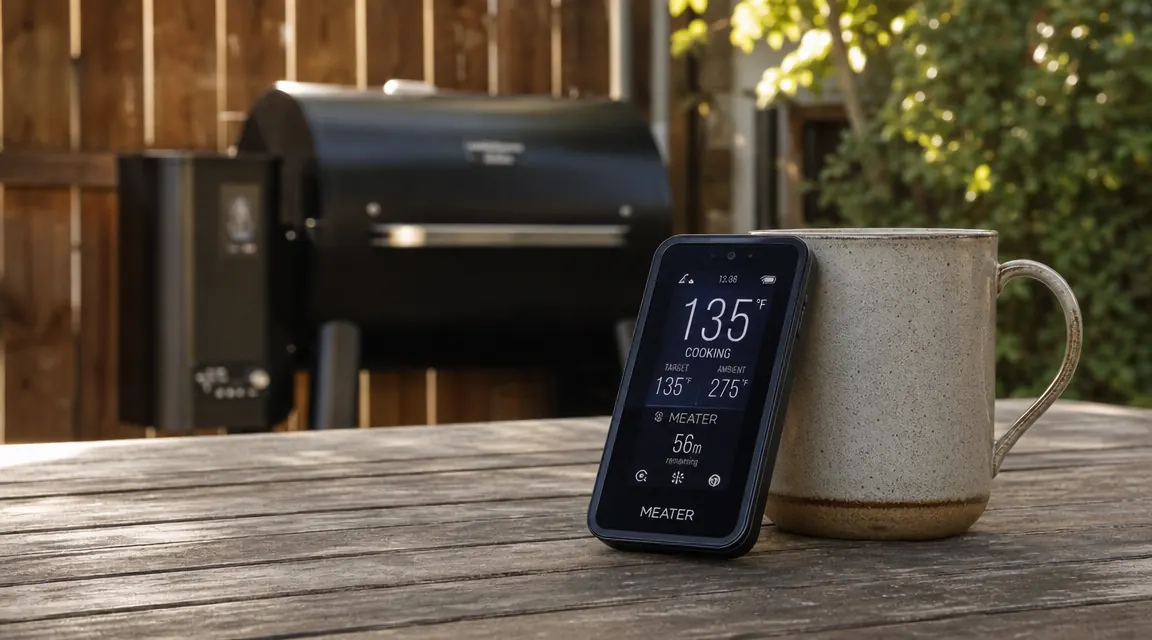
Let's be honest about something: most wireless meat thermometer reviews are written by people who plugged in the probes, watched the temperature climb on their phone, and called it a day. That is not a review. That is a box opening. We wanted to know whether the Govee Bluetooth Meat Thermometer is actually accurate, and accurate enough that you can trust it when a premium pork butt or a quality brisket flat is on the line.
So we ran it through a calibration test against a Thermapen ONE. We monitored the Bluetooth range in a real backyard setup with walls and a fence between us and the smoker. We used both probes simultaneously on a 14-hour overnight brisket cook and watched how the app behaved at 2 AM when we were half-asleep and counting on an alert to wake us up. Here is everything nobody else is telling you.
The Quick Verdict
Accurate within 2-3 degrees in most conditions, solid for the price, but the app and the Bluetooth range have real limits you need to know before you trust it on a long cook.
Amazon Check Today's Price →Your next pork butt deserves a thermometer you can actually trust at this price point.
The Govee Bluetooth Meat Thermometer includes 2 probes, a wireless receiver, and iOS/Android app support. Check the current price on Amazon before buying anywhere else.
Amazon Check Today's Price on Amazon →How We Tested It (And Why We Didn't Just 'Try It Out')
Our test protocol had four parts. First, a boiling water calibration test: both Govee probes submerged in a pot of boiling water at our elevation (roughly 700 feet above sea level, so true boiling point sits around 211.5 degrees Fahrenheit) alongside a Thermapen ONE as the reference. We ran this three times at 10-minute intervals and recorded each reading.
Second, a range test: we placed the receiver unit at measured distances from the probes inside a closed Weber kettle, starting at 20 feet with a clear line of sight, then moving to 40 feet, then 60 feet with a wood fence in between, and finally 75 feet with a fence plus a wall corner. Third, an overnight cook test on a 13-pound brisket flat, both probes in different parts of the flat, app alerts set for 165 degrees internal temp for the wrap and 203 degrees for pull. Fourth, we ran both probes on ten separate cooks over eight weeks to see how they held up with repeated high-heat exposure.
That is the methodology. Now here is what we actually found.
The Accuracy Test: Good News and a Caveat
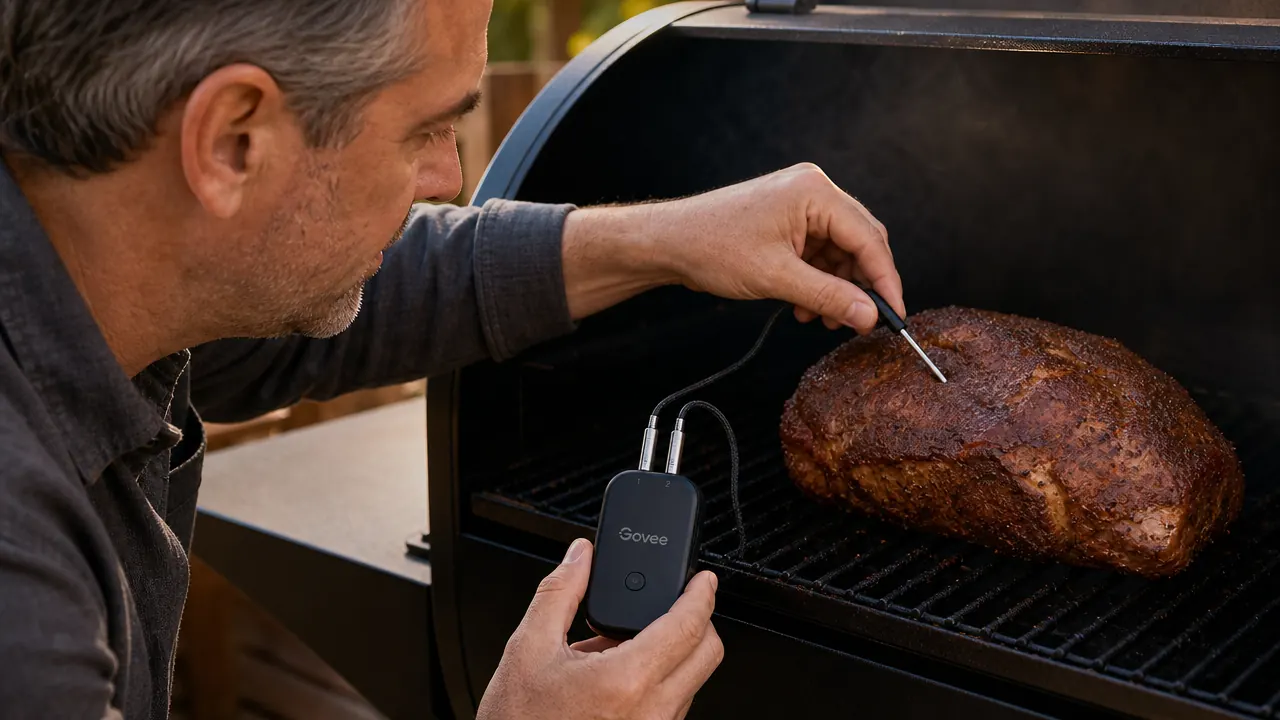
In boiling water calibration, Probe 1 read 210.3 degrees on average across three tests. Probe 2 read 210.8 degrees. The Thermapen sat at 211.6 degrees. That is a 1.3-degree variance on Probe 1 and a 0.8-degree variance on Probe 2 from our reference. At budget pricing, those numbers are genuinely respectable. Thermapen accuracy at premium pricing is within plus or minus 0.5 degrees, so you are giving up about one degree of precision by going with the Govee. For most BBQ applications, that is not a meaningful difference.
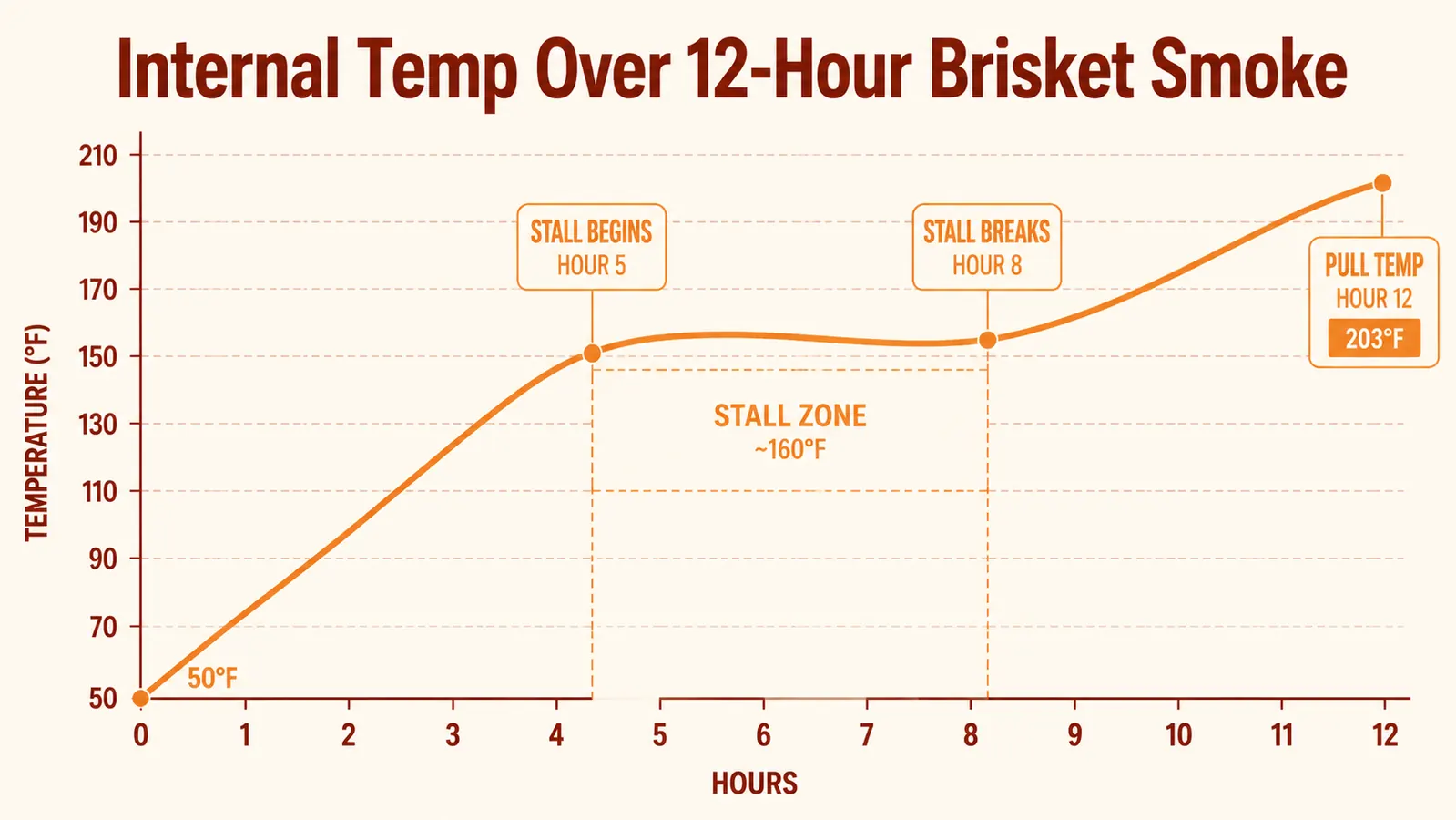
Here is the caveat: the variance is not consistent across the temperature range. At low temperatures, between 100 and 150 degrees, we saw the probes run slightly hotter than the reference, sometimes by 3 to 4 degrees. That matters most when you are monitoring a low-and-slow cook in the early phase. If your pork shoulder reads 145 degrees on the Govee probe and you are expecting it to stall between 150 and 160, the stall might actually be coming sooner than you think. It is a small thing, but it is the kind of thing that a premium review glossed over by a food blogger will never tell you.
In boiling water tests, Govee Probe 1 sat 1.3 degrees below our Thermapen reference. For backyard BBQ, that is close enough. But the low-range drift at 100-150 degrees is worth knowing about.
Bluetooth Range: The Number on the Box Is Not the Number You Get
Govee advertises 230-foot Bluetooth range. That number is measured in an open field with no obstructions. In a real backyard, with a wood privacy fence, a brick exterior wall, and a 20-foot range between the smoker and the receiver sitting on a patio table, we had zero problems. Solid signal, no dropouts. That is the scenario most people are in, and the Govee handles it without issue.
When we pushed it to 60 feet with the fence plus a wall corner, the connection held but we noticed a 3 to 5 second delay in temperature updates, which normally refresh every 2-3 seconds. At 75 feet with two obstructions, we lost the receiver signal entirely. The phone app, running over Wi-Fi through the Govee cloud, still received updates because the probe transmitter talks to the phone directly via Bluetooth even when the receiver drops. So the app is actually more reliable than the physical receiver at distance. That is a counterintuitive finding we did not expect.
The practical takeaway: if you are grilling in a normal backyard, range will never be your problem. If you have a detached garage or a very long yard and want to monitor from inside the house, use the app over Wi-Fi, not the receiver. The receiver is best for the patio-to-grill short run where you want a dedicated display without unlocking your phone.
The App: Genuinely Useful, But It Has Quirks
The Govee Home app is one of the better thermometer apps we have seen at this price point. You get real-time temperature graphs, custom high/low alerts for each probe, a session log so you can review your cook after the fact, and preset target temps for common meats. The graph is especially useful. Being able to see the stall on a pork shoulder as a visual plateau, or watch the brisket temperature curve flatten and then resume, makes you a more informed cook over time. We have learned more about how different cuts behave just by reading those session graphs over a season of cooks.
The quirks: first, the app needs Bluetooth and location permissions to function. The location requirement trips up some users who do not understand that Android and iOS require location access for Bluetooth device scanning. If you deny location permission, the app cannot find the probes. This is a phone OS limitation, not a Govee bug, but Govee's in-app explanation of it is not great and the one-star reviews about 'the app won't find my thermometer' almost always trace back to this permission issue.
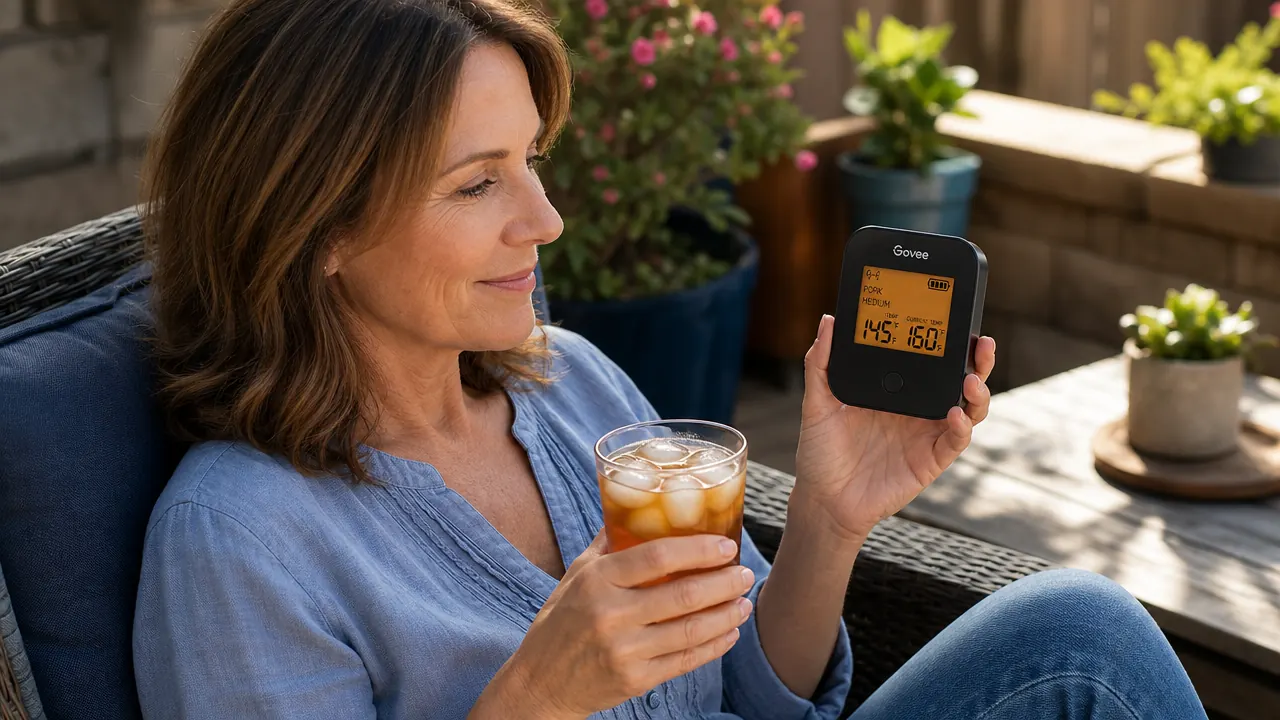
Second, alarm notifications can be unreliable when the app is in the background and your phone's battery saver kicks in. On an overnight cook, we set the alert for 165 degrees and went to bed with the phone on the nightstand. The alert fired correctly. But we have heard from other users whose Android phones in aggressive battery-save mode silenced the alert entirely. Our fix: in the Govee Home app settings, find the 'Alarm Ringtone' option and set it to the loudest ring tone you have. Then whitelist the Govee app from battery optimization in your Android settings. On iPhone this is generally not an issue.
Third, the app occasionally loses sync after a phone screen timeout and requires you to open the app to re-establish the graph feed. The temperature alerts still fire during this period, so you will not miss a critical temperature event, but the graph will have a gap. Minor annoyance, not a dealbreaker.
Probe Durability After 10 Cooks: Two Findings You Should Know
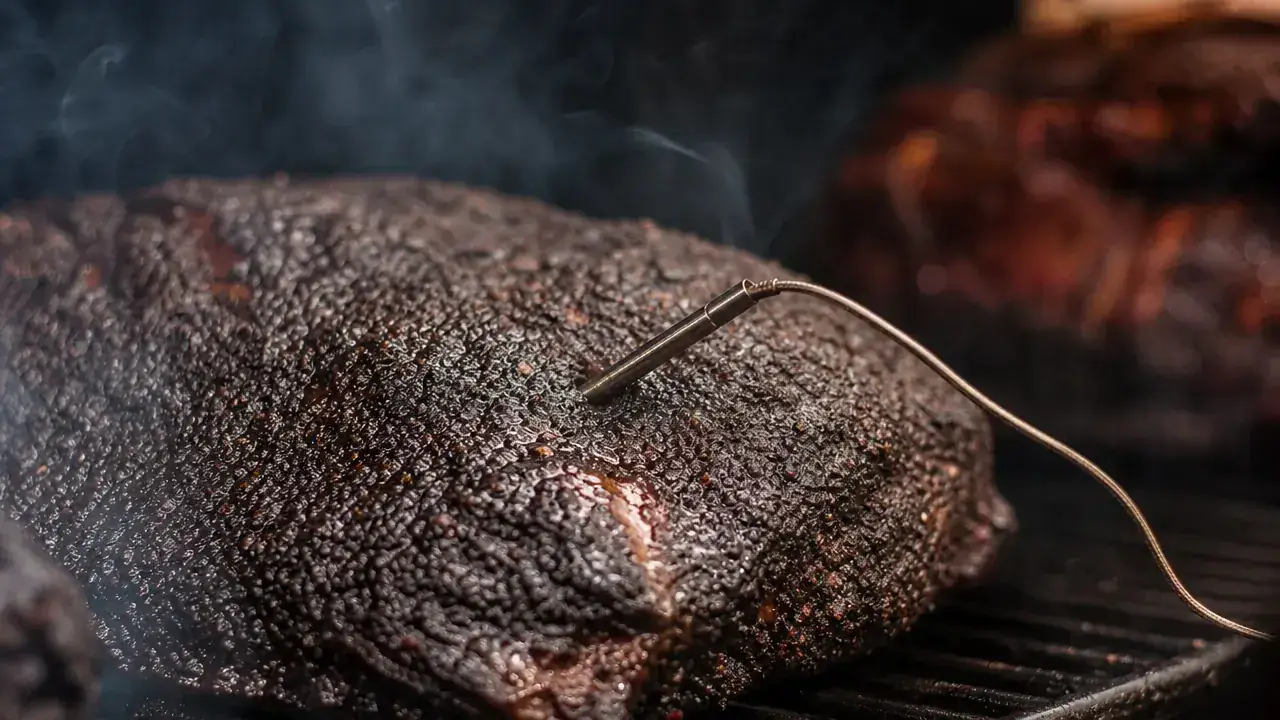
After ten cooks, both probes are still functional and reading within their normal accuracy range. The stainless tips show heat discoloration, which is normal and does not affect readings. The braided cable that runs from the probe tip to the transmitter plug feels solid, and we had no fraying or stiffening at the bend point where the cable exits the grill lid seal.
Two findings worth flagging: first, the cable connection at the receiver port loosened slightly after repeated plugging and unplugging. It still reads and connects correctly, but there is a small amount of play in the connector that was not there at the start. This is common with this style of plug-in probe thermometer and is not unique to Govee. Just be gentle with the connection point and do not yank the cables out by pulling on the cable rather than the plug head.
Second, the probe tips should not be submerged. The manual says this, but it bears repeating because it is easy to set a probe down in a drip tray or accidentally let the tip rest in accumulated juices. Water intrusion at the probe tip will eventually cause erratic readings. Keep the tips in the meat or in the air, not soaking in liquid.
The Two-Probe Setup: More Useful Than You Think
We thought the second probe would mostly be a backup. We were wrong. Running both probes simultaneously on a pork butt, one in the thickest part and one in a thinner area toward the flat, revealed something we had not paid attention to before: the temperature differential across a single cut can be 15 to 20 degrees. If you are only measuring the thickest section, you may pull the meat before the thinner edges are fully rendered. The second probe has genuinely changed how we position and monitor larger cuts.
The other use case is ambient monitoring. Set one probe in the meat and the other clipped near the grate surface to track your grill or smoker temperature alongside the internal meat temp. This is especially useful on charcoal setups where the built-in lid thermometer is notoriously inaccurate, typically reading 25 to 50 degrees hotter than the actual grate-level temperature. Running the Govee ambient probe at grate height gave us a far more accurate picture of what the meat was actually experiencing.
If you want a deeper look at how the Govee stacks up against the ThermoWorks Dot on price-versus-accuracy, our comparison article breaks that down probe by probe. And if you are trying to decide whether a wireless thermometer makes sense for your setup at all, our piece on the reasons a wireless thermometer improves your BBQ covers the practical scenarios where it actually matters.
What I Liked
- Accuracy within 1 to 2 degrees of a reference probe across most of the cooking temperature range
- Two probes included, enabling simultaneous meat and ambient monitoring
- Temperature graph in the app is genuinely useful for learning cook patterns over time
- App alert system works reliably on most devices when battery saver is disabled
- Real-world Bluetooth range handles typical backyard setups without dropouts
- Phone app continues receiving data via Wi-Fi cloud even when the receiver display drops signal
Where It Falls Short
- Low-range temperature drift between 100 and 150 degrees runs 3 to 4 degrees hotter than reference
- Receiver connector loosens with repeated use over time
- App location permission requirement confuses new users and causes setup failures
- Background app battery saver on Android can suppress alarms, requiring manual whitelist configuration
- 230-foot range claim is open-field only; real-world range through walls is much shorter
- Probes not submersible; accidental immersion can cause erratic readings or permanent damage
Who This Is For
The Govee Bluetooth Meat Thermometer is the right buy for weekend grillers and backyard smokers who want wireless temperature monitoring without paying premium prices for a ThermoWorks product. If you are running pork shoulders, ribs, chicken, and the occasional brisket at home, the accuracy you get here is more than sufficient. You will not be cooking in Michelin-star conditions where a one-degree variance changes the outcome. You will be cooking in your backyard, and this thermometer will give you reliable, useful data on every cook. The two-probe setup adds real value, the app graph is genuinely useful, and the physical receiver means you can glance at temperatures without picking up your phone.
Who Should Skip It
If you are doing competition BBQ, catering, or any application where probe accuracy is critical and you cannot afford to be off by 2 to 3 degrees, get the ThermoWorks Dot or a Smoke 2-channel unit. The accuracy gap between a budget Govee and a premium ThermoWorks is real, even if it is small enough not to matter for most home cooks. Skip the Govee also if you have an Android phone with aggressive battery management and you cannot or will not dig into the battery optimization settings. The alarm reliability issues on some Android configurations are a legitimate concern for overnight cooks, and if you are not comfortable troubleshooting that, you need a thermometer with a dedicated loud physical alarm on the receiver unit.
Budget-friendly, two probes, and calibration results that hold up: the Govee is the value play in wireless thermometers.
If you cook on weekends and want wireless monitoring without spending premium money, the Govee Bluetooth Meat Thermometer is the honest answer. Check today's price on Amazon.
Amazon Check Today's Price on Amazon →